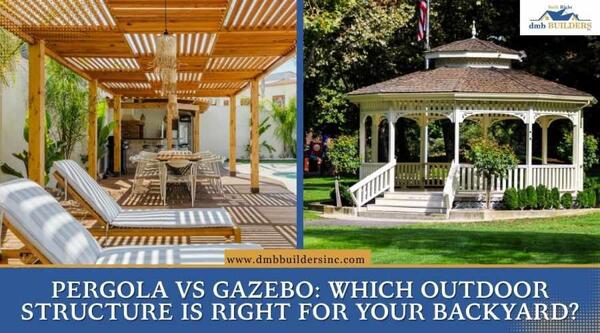
Choosing the right structure for your yard often comes down to one main comparison: pergola vs gazebo. While both options provide shade and style, they serve distinctly different functions in terms of weather protection and design. We are here to break down the costs, aesthetics, and functional differences to help you make the right investment for your backyard remodel.
- What Are the Main Differences Between a Pergola and a Gazebo
- What is a Pergola?
- What is a Gazebo?
- 4 Factors That Determine Your Choice
- 1. Shade & Weather Protection
- 2. Cost & Budget
- 3. Installation & Permits
- 4. ROI & Resale Value
- Use Case Scenarios: Which Fits Your Lifestyle?
- Make the Right Decision for Your Home
- Frequently Asked Questions
- What is the main difference between a pergola and a gazebo?
- Which is more expensive, a pergola or a gazebo?
- What is the purpose of a pergola?
- Does a gazebo provide better shade?
- Do I need a permit to build a pergola or gazebo?
What Are the Main Differences Between a Pergola and a Gazebo
Pergolas are generally more affordable and offer partial shade for defining spaces, while gazebos are more expensive but provide complete shelter from the elements.
Feature | Pergola | Gazebo |
Roof | Open grid (Partial Sun) | Solid roof (Full Shade/Rain Proof) |
Cost | More affordable due to fewer materials and a simpler design | Higher investment due to complex roof construction and labor |
Aesthetics | Modern, airy, architectural | Traditional, defined, ornamental |
Best For | Defining a patio, dining, and gardens | All-weather protection, bug-free zones |
What is a Pergola?
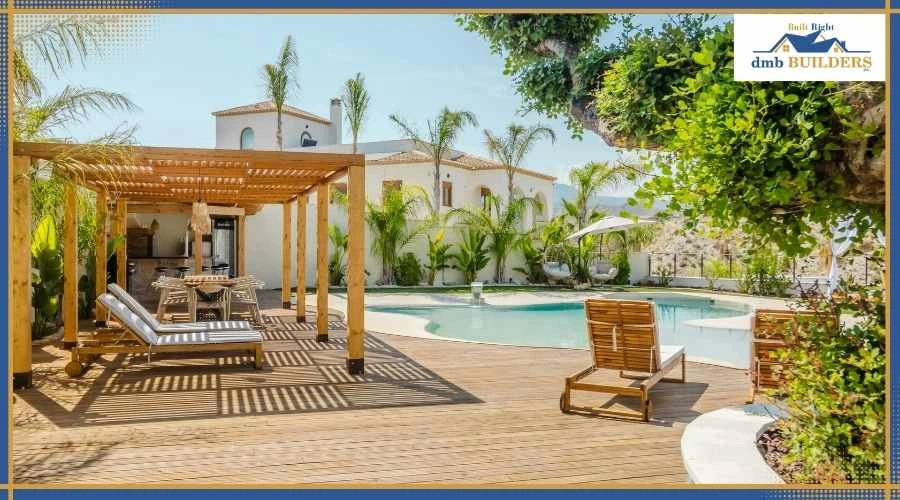
A pergola is an open-air structure with vertical posts and a lattice roof, designed to define a space without fully closing it off. A pergola has vertical posts supporting a lattice roof that filters sunlight instead of fully blocking it. It’s ideal for defining a patio or outdoor kitchen while maintaining an open view of the sky.
Pergolas are frequently attached to the home to create a seamless extension of the indoor living space, though they can also be built as freestanding structures over a deck or garden path.
What is a Gazebo?
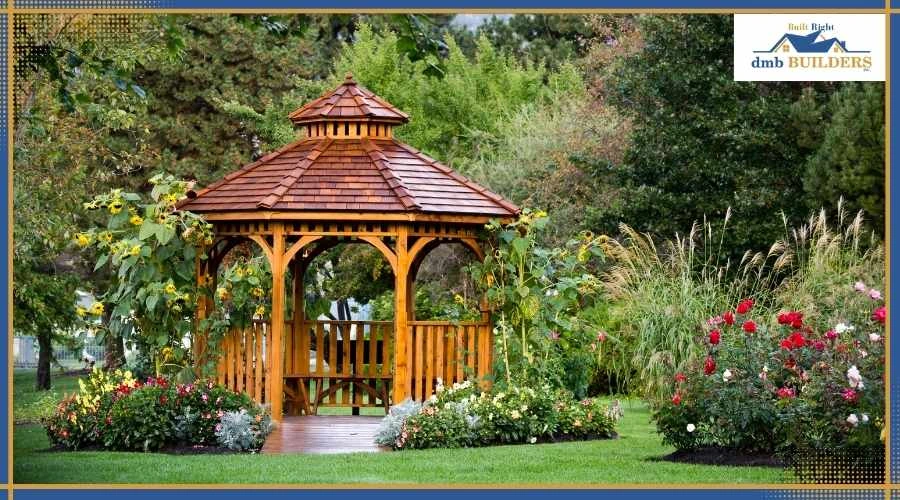
A gazebo is a freestanding pavilion with a solid, pitched roof and a built-in floor, designed to offer total protection from the weather.
A gazebo is a distinct pavilion structure, traditionally octagonal or round, though rectangular designs are becoming popular. Unlike a pergola, a gazebo has a solid, pitched roof that provides full shade and runoff for rain.
Gazebos are almost always freestanding and typically include a built-in floor or raised deck, making them a "destination" retreat placed further out in the garden. They are perfect for homeowners who want a cozy, sheltered spot to read or relax, regardless of the weather.
4 Factors That Determine Your Choice
To choose the right structure, you must compare the level of weather protection you need, your available budget, installation complexity, and potential return on investment (ROI).
1. Shade & Weather Protection
A pergola offers about 40-60% shade. The overhead beams break up harsh UV rays, making a hot afternoon comfortable, but they allow plenty of airflow. However, a standard pergola is not rainproof. If it rains, you will get wet unless you add a retractable canopy.
A gazebo provides 100% protection from rain, snow, and direct sun. If you live in an area with frequent summer storms or want a space that stays dry year-round, a gazebo is the superior functional choice.
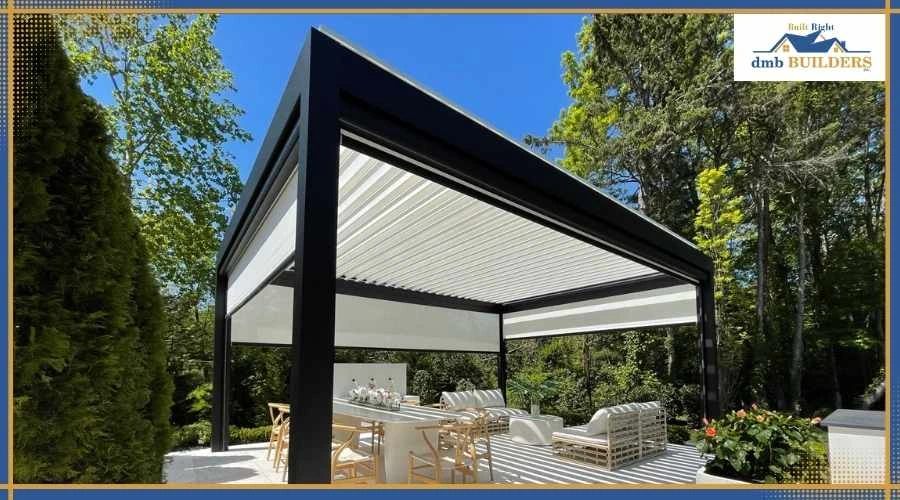
The "Hybrid" Solution: Louvered Pergolas. There is a modern solution that bridges the gap known as Louvered Pergolas. These "hybrid" structures feature motorized roof slats (louvers) that you can open for sun or close completely to lock out rain. This gives you the airy feel of a pergola with the function of a gazebo.
2. Cost & Budget
When looking at the cost of pergola vs. gazebo builds, the pergola is generally the budget-friendly winner. Here is why the costs differ between the two structures:
Pergola Cost | Gazebo Cost |
These are typically 30-50% cheaper than gazebos because they require fewer materials since they lack a solid roof, shingles, underlayment, and complex trusses. | Gazebos command a higher price due to the labor intensity of building a water-tight roof and the need for more finished materials like flooring and railings. |
While big-box store kits are available, a custom build offers superior value. Custom structures are built with proper footings and high-quality materials that offer better wind ratings and longevity than lightweight aluminum kits.
3. Installation & Permits
Do I need a permit to build a pergola or gazebo? In most cases, yes, but it depends on the design and placement. Here is how permit requirements usually work for these projects:
- Attached Structures: If you attach a pergola to your home, it almost always requires a permit because it is considered a structural modification.
- Freestanding Structures: Small freestanding structures (often under 100-120 sq ft) may be exempt from permits in some areas, but you must check your local building codes and HOA guidelines.
- Timeline: Because pergolas have a simpler design, they are faster to build. Gazebos require more time to properly frame, roof, and finish the flooring.
4. ROI & Resale Value
Investing in a backyard structure improves your property's marketability. Both structures add value, but they appeal to different buyers depending on their preferences:
Pergola | Gazebo |
This appeals to modern buyers looking for "indoor-outdoor flow". | This appeals to traditional buyers who view it as a bonus "outdoor room". |
Use Case Scenarios: Which Fits Your Lifestyle?
Choose a pergola for entertaining and aesthetics, or choose a gazebo for privacy and all-weather comfort.
Choose a Pergola if | Choose a Gazebo if |
You want to define an outdoor kitchen or dining area. | You want a bug-free zone that is easier to screen in. |
You want vines or plants to grow overhead. | You want a quiet reading nook away from the house. |
You prefer a sleek, modern look. | You need total rain protection. |
Make the Right Decision for Your Home
There is no "wrong" choice, only the choice that fits your specific yard orientation, budget, and lifestyle goals.
Whether you choose the open elegance of a pergola or the cozy shelter of a gazebo, both structures will upgrade your lifestyle and your property value. The key is to match the structure to how you actually plan to use your yard. Our expert remodeling contractors at dmb Builders Inc can help you design the perfect addition to your home.
Frequently Asked Questions
What is the main difference between a pergola and a gazebo?
The main difference is the roof. A pergola has an open, lattice roof that allows sunlight and air to pass through, while a gazebo has a solid, continuous roof that blocks rain and sun completely.
Which is more expensive, a pergola or a gazebo?
A gazebo is typically more expensive. It requires more materials (shingles, flooring, railings) and more labor to ensure the roof is water-tight. Pergolas are generally 30-50% cheaper to build.
What is the purpose of a pergola?
The purpose of a pergola is to define an outdoor living area, such as a patio or dining space, and provide partial shade without obstructing the view of the sky or restricting airflow.
Does a gazebo provide better shade?
Yes. Because a gazebo has a solid roof, it provides 100% shade and UV protection. A pergola only provides partial shade (about 40-60%) depending on the spacing of the beams.
Do I need a permit to build a pergola or gazebo?
Usually, yes. If the structure is attached to your house, a permit is almost always required. Freestanding structures may be exempt if they are small (under a certain square footage), but you should always check with your local municipality before building.

Recent Posts

When Is the Best Time to Remodel Your Home?
Feb 10, 2026